

I’ve spent years following the evolution of brain stimulation technology, and what we’re seeing now would have seemed like science fiction a decade ago. People are using electrical currents to change how their brains work, and they’re doing it from their living rooms. But here’s what you need to know before you consider joining them.
The Technology Behind the Headlines
Brain stimulation therapy at home centers around a technique called transcranial direct current stimulation, or tDCS. The concept is surprisingly straightforward. Your brain runs on electricity. Every thought, every movement, every emotion involves tiny electrical signals jumping between neurons. tDCS applies a weak electrical current through electrodes placed on your scalp, gently nudging those neurons to be more or less active depending on where you place the electrodes.
Think of it like adjusting the volume on different parts of your brain. The FDA approved the first at-home brain stimulation device for depression in December 2025, a milestone that signals we’re entering a new era of accessible neurotechnology. But that doesn’t mean every device out there is safe or effective.
What the Science Actually Shows
I’ll be straight with you. The research on at-home electrical brain stimulation is a mixed bag, and that’s important to understand.
On the promising side, recent studies show that home-based tDCS can lead to significant reductions in depression, with some patients achieving remission rates that rival traditional therapies.
But here’s where it gets complicated. A 2023 trial published in the Lancet found tDCS to be no better than a placebo for treating depression, directly contradicting other studies. Why the conflicting results? The devil is in the details. Electrode placement, current intensity, session duration, and what you’re doing during stimulation all matter tremendously.
The DIY Movement and Its Dangers
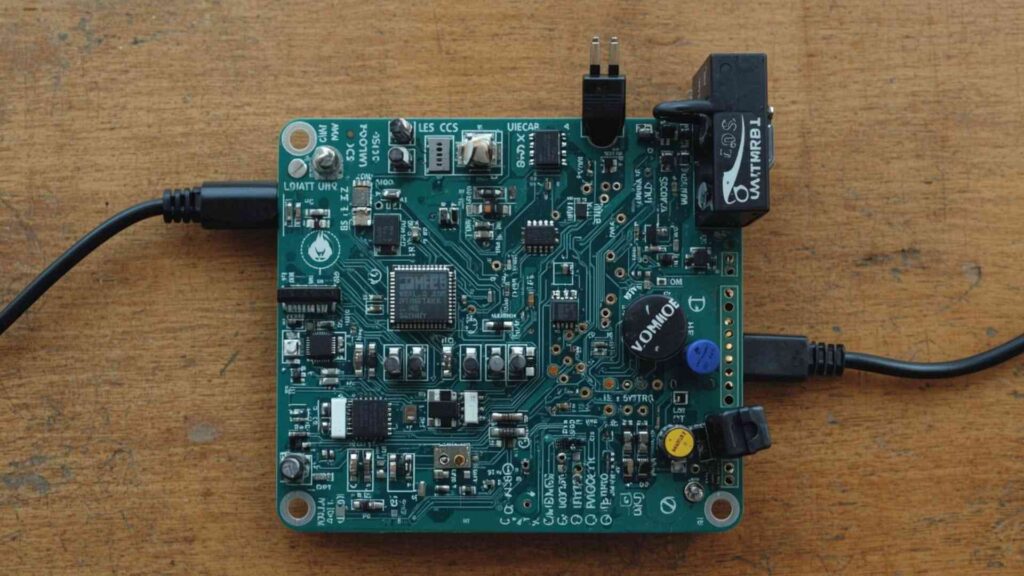
There’s a thriving underground community of brain hackers who build their own tDCS devices. The Reddit forum dedicated to DIY brain stimulation has grown from 2,500 to around 11,000 subscribers over five years, with people sharing circuit diagrams, electrode placement maps, and anecdotal success stories.
I get the appeal. These devices can be assembled for as little as $10 to $40, compared to hundreds of dollars for commercial options. People are using them to study for exams, improve gaming performance, or treat their own depression without the hassle and expense of clinical visits.
But this is where I need to pump the brakes. Hard.
A group of leading neuroscientists published an open letter warning DIY users that changes initiated during stimulation can be long-lasting and even self-perpetuating, with cognitive enhancements reported six months after stimulation. The key phrase here is “for better or worse.”
The Hidden Risks Nobody Talks About
Current flows between electrodes in complex ways based on different tissues in the head and can affect various structures along its path, with effects extending beyond brain regions directly affected to connected brain networks. You might think you’re targeting your prefrontal cortex to improve focus, but you could be inadvertently affecting other brain networks.
Even more concerning, stimulation can enhance the rate of learning new material but at the cost of processing learned material, and vice versa, depending on the stimulation site. In other words, you might be trading one cognitive ability for another without realizing it.
What Can Go Wrong
Let me paint a sobering picture. The most common adverse effects include skin lesions similar to burns, which can arise even in healthy subjects, and mania or hypomania in patients with depression. There’s even been a reported case of seizure following tDCS, though the causal relationship remains unclear.
We have never formally studied tDCS at the frequencies many DIY users experiment with, such as stimulating daily for months or longer, warns one prominent neuroscience paper..
The FDA Approval Changes Everything (Sort Of)
The Flow FL-100’s FDA approval in December 2025 represents a watershed moment. This is the first time a regulatory body has said “yes, this specific device, used in this specific way, is safe and effective enough for home use.”
The approval was based on a 2024 phase 2 trial involving 174 people, where participants using the headset for 30-minute sessions over 10 weeks reported significant relief from depression symptoms. The remission rates were impressive, with 58% of patients achieving remission by the end of the 10-week trial.
Medical Supervision Matters More Than You Think
Here’s something that doesn’t get enough attention: even with FDA-approved devices, medical supervision makes a difference.
Why does this matter? Because mild changes in tDCS settings including current amplitude, stimulation duration, and electrode placement can have big and unexpected effects.
Small mistakes have big consequences. Placing an electrode one centimeter off target could mean you’re stimulating the wrong brain region entirely. Using 2mA instead of 1mA doesn’t necessarily double the effect; it might do the opposite.
What Actually Works: The Evidence-Based Approach
If you’re considering at-home electrical brain stimulation, here’s what the evidence supports:
Depression treatment is the strongest use case. Among real-world users of FDA-approved devices, 77% see improvements in as little as three weeks. This isn’t hype; this is documented, peer-reviewed, FDA-scrutinized data.
Chronic pain management shows promise when combined with other therapies. Pain interference, the extent to which pain hinders engagement with physical and mental aspects of life, improved significantly after tDCS treatment.
Stroke recovery and neurological rehabilitation have legitimate research backing them. NYU Langone launched a virtual tDCS program for treating cognitive, motor, speech, or mood symptoms in conditions including multiple sclerosis, movement disorders, and stroke recovery.
Notice what’s not on this list? Becoming superhuman. Gaming dominance. Overnight genius. If someone is promising you those results, they’re selling dreams, not science.
Making the Decision: A Framework for Thinking About Risk
When you’re considering any emerging medical technology, you need to weigh benefits against risks intelligently. For at-home electrical brain stimulation, ask yourself:
What’s your specific condition? Depression with failed medication trials? Strong evidence supports consideration. Want to ace your calculus final? Weak evidence, unclear benefits, unknown risks.
What are your alternatives? Have you exhausted standard treatments? Are you considering this as a first-line therapy or a last resort? The risk-benefit calculation changes dramatically based on your situation.
Can you access proper supervision? Remote monitoring through apps and clinician portals makes a huge difference. DIY with zero medical oversight is a different risk category entirely.
Are you in a high-risk group? Conditions like epilepsy, bipolar disorder, or pregnancy dramatically shift the risk profile. For some people, the answer is simply “no” regardless of potential benefits.
The Bottom Line
The technology is real. Some of the benefits are real. But so are the risks, and so is the hype. Navigate this landscape with your eyes open, and you’ll be better positioned to make the right decision for your unique situation.
The future of neurotechnology is arriving faster than most of us expected. Whether that future includes brain stimulation in your home depends on careful consideration of your specific needs, risks, and the quality of evidence supporting your particular use case.