

When someone experiences a stroke, the journey back to normal function can feel overwhelming. Traditional rehabilitation therapies work, but they take time and don’t always lead to full recovery. That’s where transcranial direct current stimulation (tDCS) enters the picture as a promising addition to standard stroke rehabilitation protocols.
What Makes tDCS Different in Stroke Recovery?
Transcranial direct current stimulation is portable, safe, and non-invasive, making it particularly suitable for stroke recovery because it doesn’t provoke seizures and can be combined with other rehabilitation methods like occupational or physical therapy.
Unlike invasive brain stimulation techniques, tDCS uses a gentle electrical current delivered through electrodes placed on the scalp. The treatment is so mild that patients typically feel nothing more than slight tingling, if they notice anything at all.
The technology works by modulating neuronal activity in targeted brain regions. Think of it as giving your brain’s recovery processes a helpful nudge in the right direction.
Anodal stimulation increases cortical excitability in the stimulated brain tissue while cathodal stimulation decreases it, allowing therapists to either boost activity in damaged areas or calm overactive regions that might be interfering with recovery.
⚡ What Makes tDCS Different?
Safe • Non-Invasive • Portable
🧠 Gentle Brain Stimulation
Uses mild electrical currents through scalp electrodes — no surgery, no pain.
🤝 Works With Rehab
Pairs seamlessly with physical or occupational therapy to enhance recovery.
⚙️ How It Works
tDCS gently modulates brain activity to support healing and neuroplasticity.
A small current gives your brain a helpful nudge toward recovery.
✳️ Portable, painless, and powerful — tDCS adds science-backed support to traditional stroke rehab.
The Science Behind tDCS Stroke Rehabilitation
After a stroke, your brain doesn’t just sit idle. It actively reorganizes itself, forming new connections and pathways to compensate for damaged tissue. This process, called neuroplasticity, is your brain’s natural recovery mechanism. The challenge is that this reorganization doesn’t always happen in the most helpful way.
A well-known phenomenon following stroke is interhemispheric inhibition, where the healthy hemisphere inhibits the contralateral affected hemisphere, potentially slowing the recovery process. Essentially, the undamaged side of your brain can become overactive, suppressing the injured side’s attempts to heal and rebuild function.
The Difference With tDCS
This is where targeted brain stimulation becomes valuable. The approach for applying tDCS generally involves either up-regulating the lesional hemisphere with excitatory anodal stimulation, down-regulating the contralesional hemisphere with inhibitory cathodal stimulation, or using bihemispheric stimulation with anode on the lesional side and cathode on the contralesional side simultaneously.
Recent animal studies have provided encouraging evidence. Research showed that tDCS accelerates motor recovery in mice, with performances in both skilled and nonskilled motor tasks significantly higher compared to sham-stimulated mice as early as 24 hours after stimulation. While animal models don’t perfectly translate to human outcomes, they help researchers understand the mechanisms at work.
Upper Extremity Recovery: Getting Your Arm and Hand Function Back
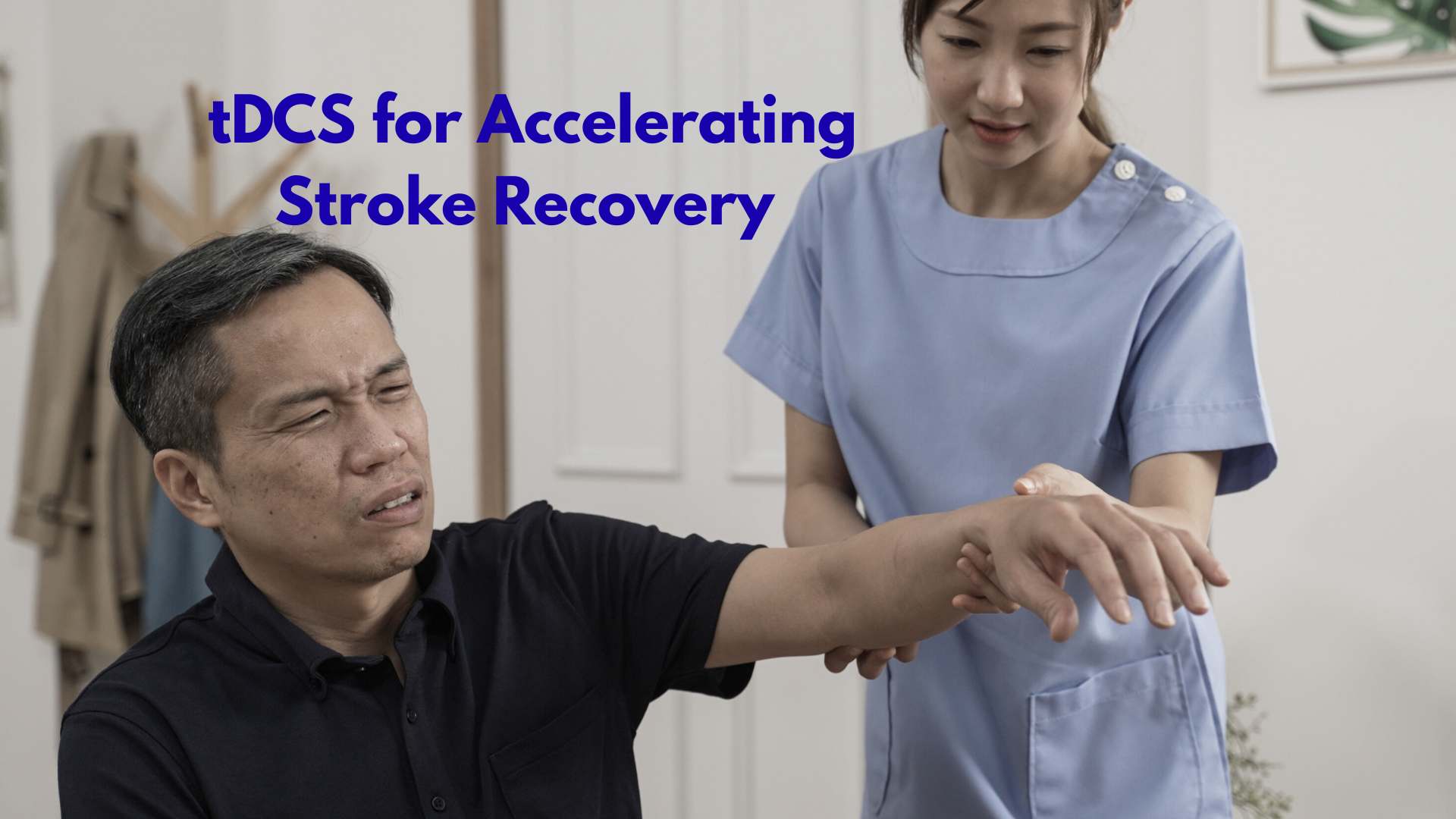
One of the most frustrating aspects of stroke recovery is regaining use of an affected arm or hand. Simple tasks like buttoning a shirt, holding a coffee cup, or writing become major challenges. Traditional physical therapy helps, but researchers have been exploring whether tDCS can accelerate these improvements.
Studies investigating tDCS for post-stroke motor recovery showed a moderate effect, with particularly large improvements seen in studies using bihemispheric tDCS montage or that recruited chronic stroke patients. The Fugl-Meyer Upper Extremity scale, a standard measure of arm function after stroke, consistently shows improvements when tDCS is added to conventional therapy.
The timing of intervention matters significantly. The largest recovery occurs within the first 12 months post-stroke, with a “window of opportunity” within the first 30 days of stroke onset when neuroplasticity and the potential for recovery is enhanced and changes are dramatic. This doesn’t mean tDCS is only useful early on, but it does suggest that earlier intervention might yield better results.
Beyond Movement: tDCS for Language Recovery in Aphasia
Stroke doesn’t only affect movement. Aphasia, a language disorder, occurs in up to 38 percent of stroke survivors, often leaving them with lifelong residual deficits that negatively impact safety and quality of life. People with aphasia struggle to find words, form sentences, or understand what others are saying. The social isolation and frustration that follows can be devastating.
Speech and language therapy remains the cornerstone of aphasia treatment, but like physical therapy for movement disorders, it has limitations.
The research on tDCS for aphasia rehabilitation has shown promise, particularly for specific aspects of language. There is limited evidence that tDCS may improve naming performance in naming nouns at the end of the intervention period and possibly also at follow-up. While this might sound like a modest benefit, being able to name objects and people is fundamental to daily communication.
🧠 Stroke Recovery Boost
tDCS + Therapy = Faster, Stronger Recovery
💪 Arm & Hand Function
tDCS helps rewire the brain for better movement.
⏰ Timing is Key
The brain’s recovery window is wide open early on.
🗣️ Language & Aphasia
tDCS can support speech therapy — helping stroke survivors find words faster.
✳️ tDCS doesn’t replace therapy — it amplifies it.
Critical Timing: When to Start tDCS Treatment
The question of when to begin tDCS treatment isn’t straightforward. Your brain goes through different phases after a stroke, and what helps in one phase might not be optimal in another.
In the acute phase (within days of the stroke), the brain is still dealing with inflammation and immediate damage. Physical therapy in this phase is often limited because patients may have severe impairments. Early tDCS might represent a unique opportunity to avoid delaying rehabilitation to the chronic phase for those patients who cannot start physiotherapy in the subacute phase.
The subacute phase (roughly one to six months after stroke) is when most spontaneous recovery happens. This is often considered the ideal window for intensive rehabilitation.
In the chronic phase (more than six months after stroke), recovery typically plateaus. Many patients feel stuck at their current level of function. However, research suggests that even chronic stroke patients can benefit from tDCS.
Practical Considerations: What Treatment Looks Like
If you’re considering tDCS as part of stroke rehabilitation, understanding what to expect helps set realistic expectations.
Treatment sessions typically last 20 to 30 minutes. The technology uses low direct current delivered through electrodes on the head, working by exciting or inhibiting the brain’s neurons in the stimulated area, with patients experiencing no more than tingling or slight itching if they feel anything at all.
Combining Technologies for Better Outcomes
tDCS doesn’t have to work alone. Researchers are exploring combinations with other rehabilitation technologies to boost outcomes even further.
Robot-assisted therapy has become increasingly common in stroke rehabilitation, providing consistent, repetitive movements that help retrain the brain. Studies hypothesize that tDCS primes motor cortex circuits, increasing motor cortex excitability that is sustained after robot-assisted training, with the combination of these techniques enhancing synaptic plasticity and motor relearning.
Understanding the Limitations and Realistic Expectations
Being honest about what tDCS can and cannot do is important. The technology shows promise, but it’s not a miracle cure.
Recent systematic reviews have found mixed results. Some studies show significant benefits while others find no difference compared to sham treatment. The most recent review concluded that stroke patients who received tDCS have better clinical outcomes in terms of disability, although no clear improvement in arm and leg function, muscle strength or cognitive abilities has been found.
These mixed results don’t necessarily mean tDCS doesn’t work. They might reflect differences in how studies were conducted, what parameters were used, which patients were included, and when treatment was started. The field is still working to identify the optimal protocols!
Looking Ahead: The Future of tDCS in Stroke Recovery
The field of neurorehabilitation is evolving rapidly. Advances in brain imaging, better understanding of neuroplasticity, and improvements in stimulation technology are all converging to make treatments like tDCS more effective.
High-definition tDCS, which uses multiple smaller electrodes for more focal stimulation, represents one advancement. This allows more precise targeting of specific brain regions while minimizing effects on surrounding areas. Combined with individual brain mapping, this personalized approach could address the variability problem that has plagued earlier studies.
Taking the Next Steps
If you or a loved one has experienced a stroke and you’re interested in tDCS, the first step is discussing it with your rehabilitation team. Not every stroke patient is a good candidate for tDCS, and professional assessment is essential to determine if it might be helpful in your specific situation.
Questions to discuss with your healthcare provider include:
What is your stroke type and location? The location and extent of brain damage influences whether tDCS might help.
How long has it been since your stroke? Timing affects treatment approach and expected outcomes.
What specific functions are you trying to improve? tDCS protocols differ for motor recovery versus language rehabilitation.
What other therapies are you currently doing? tDCS works best when combined with active rehabilitation.
Are there any contraindications? Certain medical conditions or implanted devices might rule out tDCS.
The journey of stroke recovery is challenging, but new tools and approaches continue to emerge. tDCS stroke rehabilitation represents one promising avenue that’s backed by growing research evidence. While it’s not a standalone solution, when properly integrated with comprehensive rehabilitation programs, it may help some patients achieve better outcomes than with traditional therapy alone.
As research continues and our understanding deepens, the role of tDCS in neurorehabilitation will likely become clearer. For now, it remains an exciting area of investigation that offers hope for improved recovery to the millions of people affected by stroke each year.