

First, a foreword from me, Chloe, about this tremendous feat by my dear co-blogger Dr. Nazish Idrees Chaudhary (PhD).
We are excited to enrich our usual content with a detailed research paper by the good doctor, a distinguished clinical psychologist and assistant professor at The University of Lahore. This paper advocates for innovative optogenetic tools using light therapy to manage addictive behaviors. Dr. Chaudhary’s comprehensive study bridges the gap between cutting-edge neuroscience and practical addiction treatment, providing fresh insights into non-pharmacological interventions. We commend her exceptional contribution, which complements our ongoing mission to deliver the latest advancements in brain health and wellness.
Abstract
Introduction: Addictive behaviors are continuously taking countless forms that significantly contribute to the global burden of mental health illnesses and strain care facilities. Achieving stability through the monoamine model appears to offer a potential solution to escape this uncontrollable cycle of vulnerability.
Method: Research studies were included based on criteria such as addiction, optogenetics, green colour, neurobiology, emotions, obsessions, and compulsions. Initial tools like Google Scholar and Web of Knowledge provided 7,215 results. Relevant data published between January 2018 and June 2022 was reviewed to offer the latest implications for researchers in this field. The in-depth study of the information concluded with findings presented as concrete directions for scientists to respond to.
Discussion and Conclusion: The review highlighted two valuable methods to translate existing knowledge into practice, addressing the alarming rise in the number of people experiencing obsessions and compulsions, which lead to various addictive behaviors. The model devised in the review emphasizes the need for innovative developments in optogenetic tools and therapeutic techniques for prevention, management, recovery, and relapse prevention.
Keywords: Behavior Control, Technology Addiction, Compulsive Behavior, Lighting, Psychological Intervention
Introduction
Addictive behavior, commonly known as addiction, involves an individual’s loss of control in seeking specific activities, substances, objects, or actions, characterized by obsessive thoughts and compulsions (Santangelo et al., 2022). This behavior can harm individuals in multiple areas of life, including social, academic, physical, and emotional domains. Such physical dependence distracts attention from other pleasurable activities (Jouhki & Oksanen, 2021). Digital, food, gaming, shopping, gambling, drug use, pornography, and sexual addictions are increasing regularly, regardless of demographic factors. The global prevalence of these behaviors is reported to be approximately 31% in every nation (Cheng et al., 2021).
Neurobiological and neuroimaging evidence suggests that obsessive and compulsive clinical symptoms are functions of the prefrontal cortex and sub-cortical mechanisms. Changes in cognition, emotions, and behaviors are experienced when response inhibition becomes impaired (Ceceli et al., 2022). Other brain areas are also involved in pathogenesis. The continuation of addictive behaviors is predominantly modulated by neurochemicals at a modular level. The dopaminergic pathway is associated with direct excitatory transmission as a reward (Zhu et al., 2022).
The scientific data on substance use and related compulsive behavioral disorders is expanding rapidly. While lived experiences and cultural or environmental factors may vary over time, they combine with genetic and hormonal factors during the development and progression of these disorders. For example, socio-cultural activities at an early age may predict the diagnosis of compulsive use of a chemical or non-chemical substance (Gupta et al., 2022). Imbalances in neurotransmitters such as dopamine, serotonin, and glutamate are widely associated with mental and behavioral changes (Gupta et al., 2022). The neuronal regions that assess frequent episodes of repetitive and unwanted behaviors due to abnormal neural activity are mainly the corticostriatal-thalamocortical pathways (Chatzittofis et al., 2022; Endres et al., 2022).
Recent studies suggest that some anatomical, psychosocial, and evolutionary factors influence the neurochemical processes in the brain that deal with addictive patterns. However, the primary features of obsessions and compulsions are triggered by sensory information received by the brain, which is then interpreted through cognition and executive functioning. The etiological factors of these behaviors are rarely known and are complex (Balmori et al., 2022). The significance of each risk and protective factor remains unaddressed in the existing literature. There is a link between metabolism, the reward circuit mechanism, and different phases of the addictive process, including acquisition, progression of consumption, and abstinence. L-Dopa, the precursor of dopamine, is crucial for balancing stability and flexibility. Achieving a balance between the goal of reward-seeking and the distraction from that reward-seeking pleasurable behavior is essential. Maintaining this chemical balance leads to cognitive control, which indicates behavioral management. Visual sensory information also affects neurotransmitters and mood (Riedel et al., 2022).
This review paper aims to highlight the implications of exposure to colourful light in managing addictive behaviors. With this hypothesis, there is potential to develop quick therapeutic interventions. One exciting option is an optogenetic tool, which could reduce comorbid psychiatric and physical conditions, thereby lessening the economic and social burden. This review paper proposes to address gaps in interventions for addictive behaviors, focusing on the neurobiological influence on the brain and behavior. The red colour light may facilitate cellular functioning in rodents by enabling action potential channelling and long-term potentiation for specific neuron subtypes. Research indicates that infrared red light has higher penetration levels than blue, yellow, and green light. The role of green light has also been tested for managing epilepsy, with stimulation turning the pH level alkaline, similar to the function of an herb. There is some evidence supporting this intervention.
There is a dire need to re-examine available knowledge and data to produce non-pharmacological, technological, or non-technological interventions that are less expensive, painless, and free of side effects. Such interventions could quickly reduce addictive behaviors with the help of specific light colours. The role of the environment on cells and genes has been well studied in the past decade, with hypnosis being used to alter genes for weight loss, painless surgery, and more.
Light as a Visual Stimulus in Optogenetics
Optogenetics is an advancing technique in the fields of neurobiology and psychiatry. Its purpose is to control specific nerve cells by altering photosensitive proteins to modify brain functioning. Opto-physiology defines the relationship between cell physiology and optogenetics. The mechanism of light as it influences physiological processes may aid in developing chimeric antigen receptor (CAR) T cells for immunotherapy against tumours. It is claimed that light can switch cells in a manner similar to drugs (Tan et al., 2022). Colourful lights should be used as optogenetic tools for various patients suffering from medical conditions, surgical implants, and psychological diseases rather than invasive approaches. Non-invasive treatments are used to restore visual processing among patients with retinitis pigmentosa. Hence, visual stimuli of specific light can control cells and tissues in organisms for illness management (Paez Segala et al., 2021).
A recent study implied that focusing on interventions based on optogenetics and neural circuits could treat diseases by altering neurons. For instance, when light is exposed to the eyes, the perception of the target nerve region may encode proteins genetically by allowing selective ions to pass through the cell membrane. This invasion is facilitated by adenovirus (Chen et al., 2022). Luis-Islas et al. (2022) further verified that optogenetics stimulates and manipulates neural activity to improve health and cure disease. This occurs by guiding behavior due to the rewarding effects of activating glutamatergic, GABAergic, and dopaminergic cell types. Adamczyk and Zawadzki (2020) emphasized the role of light in producing technological devices for neuromodulation as novel brain stimulation treatments for neurological and psychiatric disorders, particularly memory issues.
Lehtinen et al. (2022) provided evidence showing how red light facilitates rodent cellular functioning by enabling action potential channelling and long-term potentiation for specific neuron subtypes. Their research indicates that infrared red light has higher penetration levels than blue, yellow, and green light. The role of green light has been tested for managing epilepsy, with green light stimulation turning the pH level alkaline, similar to the function of an herb (Chen et al., 2022). There is considerable evidence supporting this intervention.
There is a pressing need to re-examine available knowledge and data to produce non-pharmacological, technological, or non-technological interventions that are less expensive, painless, and free of side effects. Such interventions could quickly reduce addictive behaviors with the help of specific light colours. The influence of the environment on cells and genes has been well studied in the past decade, with hypnosis being used to alter genes for weight loss, painless surgery, and more (Awaludin et al., 2022; Milling et al., 2021; Roslim et al., 2022; Roslim et al., 2021).
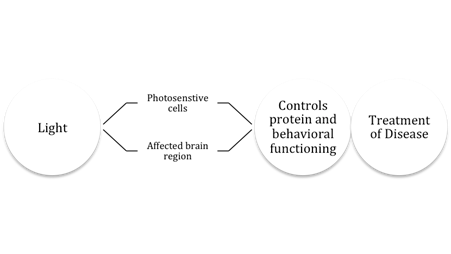
Figure 1 suggests the potential of creating an optogenetic tool as an intervention for controlling obsessions and compulsions leading to addictive behavior, based on the reviewed literature about optical physiology.
Light as a Modulator of Neurotransmitters and Behavior
Recent research on rodents by Jiménez-Zárate (2021) analysed neurotransmitter activity when exposed to light and darkness. The fluorescent light system led to pain reduction and improved locomotor activity as neurotransmitter levels fluctuated. GABA, glutamate, dopamine, and serotonin levels showed significant variations with increased light exposure. These neurophysiological changes resulted in better lumbar spinal cord activity. Similarly, Yan et al. (2019) studied the effect of bright light on humans, finding that light influences memory, learning, cognitive functions, mood, and well-being. To alter brain functions, light must influence physiological processes.
Lewis et al. (2019) discussed that hormonal changes due to light exposure can affect mood, emotional recognition and reactivity, reward processing, and stress response management. LED lighting, both during the daytime and indoors, was tested for its impact on cognitive performance and subjective mood experiences among healthy adults. The study indicated increased alertness when exposed to bright light. High-intensity, cool-coloured light was found to enhance rational thinking and optimize positive effects (Zhu et al., 2017).
Hannibal (2002) suggested that photoreceptor proteins are responsible for transmitting signals to neurotransmitters. Retinal ganglion cells create a pathway from the retina to hormone production, tracing and storing information to act as agonists for neurotransmitters. At the microscopic level, glutamate signals the brain to induce sleep through the hypothalamic pathway. Similarly, shifts in dopamine and serotonin concentrations have been linked to improved mood and judgment when mediated by dopamine precursors like L-dopa. Low levels of the tryptophan hydroxylase gene, which produces an amino acid precursor to serotonin, are associated with low serotonin levels. This link highlights how light receptor sensations carried from the retina to the brain are interpreted by nerve cells and genes using neurochemicals (Fuertes & Barata, 2021).
Effect of Colour on Mood and Emotions
Ou et al. (2004) demonstrated that colours significantly impact human emotions. Their research built a scientific model associating colour and emotion. The findings proposed that humans categorize colours as warm or cool, heavy or light, among other classifications. Typically, three primary colours and three neutral colours are used to identify emotions. Humans often associate colours with emotions such as fear, anger, sadness, and happiness. Primary colours are considered high-energy suppliers and are plausibly related to emotions like anger and happiness, whereas others are linked to sadness and fear. For instance, a low-energy colour like blue is unlikely to be associated with anger but may instead calm and relax a person. Conversely, green may evoke happiness and calmness (Kaur, 2020).
People worldwide use colours to express their emotions. The meanings of colours may differ across cultures and personalities, but they consistently influence a person’s motivation, either positively or negatively. This expression is evident in celebrations, festivals, mourning, failures, and traditional weddings. The colours people choose for their clothing often reflect their positive or negative emotional states. Responses to bright colours are almost always positive, while reactions to dull and dark colours are typically negative. The stronger the colour, the more it may affect emotions. Sometimes, a colour is linked with various emotions, impacting individuals regardless of age and gender. While preferences for specific colours may predict positive emotions, existing literature shows that yellow and green are generally perceived positively by the majority.
The concept of cool and warm colours, such as blue and green or red and yellow, respectively, is also linked to positive and negative emotional states. Further research could provide more clarity on the physiological effects of colours on mood and emotions. Kurt and Osu eke (2014) highlighted the psychological effects of colours on human emotions. From natural light to any colourful stimulus perceived from the environment, colours can transform an unpleasant mood into a pleasant one. These changes in responses can shift moods from fear to joy and sadness to happiness. Even in an enclosed space, the physical presence of colour can influence the human emotional state. The importance of exposure to light and colours should be harnessed to create therapeutic lighting products that benefit individuals suffering from mood disorders and associated behaviors.
Emotion Regulation to Disconnect Obsessive Thoughts and Behaviors
Fuss et al. (2019) identified that compulsive addictive behaviors share symptoms with obsessive-compulsive disorders. Behavioral addictions, such as sexual addiction and gaming disorder, often include a range of comorbid problems like self-harming, compulsive aggressive behavior, compulsive theft, and compulsive shopping. The pathological aspects of obsessive-compulsive or addictive behaviors are prevalent among patients with or without comorbidities, significantly relating to lifetime disruptive moods and impulsive reactions. This concept has been explored to understand how anatomical and physiological explanations can support behavior modifications for developing innovative methods to manage multiple psychiatric symptoms (Shephard et al., 2021).
One of the latest behaviors, Instagram addiction, has been linked to a lack of emotional regulation. Along with other behaviors, brand addiction has been introduced, showing that emotional state fluctuations, such as elevation, can lead to obsessions. Balancing emotions is the solution (Le, 2022). Lew-Starowicz et al. (2020) also investigated emotional dysregulation as a common reason for suffering among individuals with compulsive behaviors and addictions. It is common for patients to suffer from anxiety and mood issues, as well as thoughts, urges, and impulses to perform actions frequently. Davis and Lewis (2019) linked repetitive self-harm with addictive nature as well. Difficulties with emotion regulation are suggested to be managed among individuals with substance use disorders to control behavioral addictions (Seyed Hashemi, 2018).
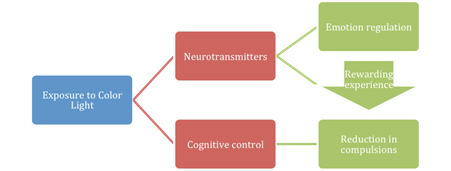
The literature summarizes that focusing on factors that facilitate emotional regulation must be examined to manage behavioral addictions and comorbid illnesses. Figure 2 describes how the use of green light may alter dopamine development. As the light processes in the frontal regions of the brain, the areas responsible for cognitive functioning enhance thought control, facilitating the reduction of obsessions. Further, as dopamine is balanced, emotion regulation takes place, resulting in happiness and joy, and stimulating the reward circuit, leading to a reduction in addictive behaviors such as compulsions.
Discussion and Conclusion
The model devised in the review emphasizes the need for innovative developments of optogenetic tools and therapeutic techniques for prevention, management, recovery, and relapse prevention. The summary highlighted the psychological effects of colours on human emotions. Natural light and colourful stimuli from the environment can transform an unpleasant mood into a pleasant one. These changes can shift moods from fear to joy and sadness to happiness. Even in enclosed spaces, the presence of colour can influence the human emotional state. The importance of exposure to light and colours should be leveraged to create therapeutic lighting products for individuals suffering from mood disorders and associated behaviors.
There are implications for clinicians, designers, researchers, scientists, medical professionals, biochemists and biotechnologists, ophthalmologists, psychological treatment workers, and healers. The study’s limitations include its focus on addiction and related behaviors, discussing exposure to natural and artificial light without specific colours. Recommendations include gathering preliminary data on the effects of specific colours on specific emotions and exploring the physiological mechanisms that aid in better mental health. There is a need to culturally define the effect of specific coloured light on neurochemicals and explore sex differences in the perception of mood and colour. The literature on neuroscience, neuroimaging, and advancements in the neurophysiology of behavioral addictions will benefit from this narrative.
This review underscores the role of light exposure on human visual sensory perception. Visual receptors carry information through nerve cells to the brain, where they are interpreted and influence the release of neurochemicals. Much work has been done on methods to increase dopamine, serotonin, and other chemicals within our bodies through drug delivery trials. This review draws attention to non-pharmacological options to enhance the rewarding experiences of our environment and reduce dependence on medication. This approach can also reduce costs associated with the lifelong intake of medication.
The discussion offers practical insights for researchers, scientists, technologists, physicians, and mental health professionals. There are implications for clinicians, designers, researchers, scientists, medical professionals, biochemists and biotechnologists, ophthalmologists, psychological treatment workers, and healers. The limitations of the study include its focus on addiction and related behaviors, with recommendations to gather preliminary data on the effects of specific colors on specific emotions. Another suggestion is to delve into the physiological mechanisms that aid in better mental health. There is a need to culturally define the effects of specific colored light on neurochemicals and explore sex differences in the perception of mood and color.
Neurochemicals regulate emotions, which lead to behavioral changes. This study provides directions to help patients with chemical and non-chemical addictions. The behavioral and emotional symptoms resulting from physical dependency could be treated without invasive medical procedures. Future researchers might study the impact of single color effects in managing addiction through emotional regulation. This will offer creative options for further innovating psychological interventions.
Firstly, the perception of a facilitating visual stimulus from the environment might help alter the biological release of neurochemicals. Secondly, creating a balance in dopamine levels would prove effective in emotion regulation, pleasure, and reward-seeking. The review also suggested that photoreceptor proteins are responsible for transmitting signals to neurotransmitters. Retinal ganglion cells create a pathway from the retina to hormone production, tracing and storing information to act as agonists for neurotransmitters.
At the microscopic level, glutamate signals the brain to induce sleep through the hypothalamic pathway. Similarly, shifts in dopamine and serotonin concentrations are linked to enhanced mood and better judgment when mediated by dopamine precursors such as L-dopa. Low levels of the tryptophan hydroxylase gene, which produces an amino acid precursor to serotonin, are associated with low serotonin levels. This link highlights how light receptor sensations from the retina are interpreted by nerve cells and genes using neurochemicals. Difficulties with emotion regulation should be managed among individuals with substance use disorders to control behavioral addictions. The review explained that focusing on factors that facilitate emotional regulation must be examined to manage behavioral addictions and comorbid illnesses.
References
Achint Kaur. (2020). A Link Between Colors and Emotions; A Study of Undergraduate Females. International Journal of Engineering Research And, V9(09). https://doi.org/10.17577/ijertv9is090319
Adamczyk, A. K., & Zawadzki, P. (2020). The Memory-Modifying Potential of Optogenetics and the Need for Neuroethics. NanoEthics, 14(3), 207–225. https://doi.org/10.1007/s11569-020-00377-1
Awaludin, S., Nurachmah, E., Soetisna, T. W., & Umar, J. (2021). The effect of a smartphone-based perioperative nursing intervention: prayer, education, exercise therapy, hypnosis, and music toward pain, anxiety, and early mobilization on cardiac surgery. Journal of public health research, 11(2), 2742. https://doi.org/10.4081/jphr.2021.2742
Balmori, A., Macías, A., & de la Puente, M. P. (2022). Hormonal Differences Between Women and Men, Their Consequences on Addiction to Substances and Considerations on the Therapeutic Approach. Current Addiction Reports, 9(2), 86–98. https://doi.org/10.1007/s40429-022-00409-8
Ceceli, A.O., Bradberry, C.W. & Goldstein, R.Z. The neurobiology of drug addiction: cross-species insights into the dysfunction and recovery of the prefrontal cortex. Neuropsychopharmacol. 47, 276–291 (2022). https://doi.org/10.1038/s41386-021-01153-9
CEEOL – Article Detail. (2021). Https://Www.Ceeol.Com/Search/Journal-Detail?Id=2128. https://www.ceeol.com/search/article-detail?id=982868
Chatzittofis, A., Boström, A. D. E., Savard, J., Öberg, K. G., Arver, S., & Jokinen, J. (2022). Neurochemical and Hormonal Contributors to Compulsive Sexual Behavior Disorder. Current Addiction Reports, 9(1), 23–31. https://doi.org/10.1007/s40429-021-00403-6
Chen, W., Li, C., Liang, W., Li, Y., Zou, Z., Xie, Y., Liao, Y., Yu, L., Lin, Q., Huang, M., Li, Z., & Zhu, X. (2022). The Roles of Optogenetics and Technology in Neurobiology: A Review. Frontiers in Aging Neuroscience, 14. https://doi.org/10.3389/fnagi.2022.867863
Cheng, C., Lau, Y. C., Chan, L., & Luk, J. W. (2021). Prevalence of social media addiction across 32 nations: Meta-analysis with subgroup analysis of classification schemes and cultural values. Addictive Behaviors, 117, 106845. https://doi.org/10.1016/j.addbeh.2021.106845
Davis, S., Lewis, C.A. Addiction to Self-harm? The Case of Online Postings on Self-harm Message Boards. Int J Ment Health Addiction 17, 1020–1035 (2019). https://doi.org/10.1007/s11469-018-9975-8
Endres D, Domschke K, Schiele MA. [Neurobiology of obsessive-compulsive disorder]. Der Nervenarzt. 2022 Jul;93(7):670-677. DOI: 10.1007/s00115-022-01331-0. PMID: 35725830.
Fuertes, I., & Barata, C. (2021). Characterization of neurotransmitters and related metabolites in Daphnia magna juveniles deficient in serotonin and exposed to neuroactive chemicals that affect its behavior: A targeted LC-MS/MS method. Chemosphere, 263, 127814. https://doi.org/10.1016/j.chemosphere.2020.127814
Fuss, J., Briken, P., Stein, D. J., & Lochner, C. (2019). Compulsive sexual behavior disorder in obsessive–compulsive disorder: Prevalence and associated comorbidity. Journal of Behavioral Addictions, 8(2), 242–248. https://doi.org/10.1556/2006.8.2019.23
Hannibal, J. Neurotransmitters of the retino-hypothalamic tract. Cell Tissue Res 309, 73–88 (2002). https://doi.org/10.1007/s00441-002-0574-3
Jouhki, H., & Oksanen, A. (2021). To Get High or to Get Out? Examining the Link between Addictive Behaviors and Escapism. Substance Use & Misuse, 57(2), 202–211. https://doi.org/10.1080/10826084.2021.2002897
Jiménez-Zárate, B. S., Piña-Leyva, C., Rodríguez-Sánchez, M., Florán-Garduño, B., Jiménez-Zamudio, L. A., & Jiménez-Estrada, I. (2021). Day-Night Variations in the Concentration of Neurotransmitters in the Rat Lumbar Spinal Cord. Journal of circadian rhythms, 19, 9. https://doi.org/10.5334/jcr.215
Kurt, S., & Osueke, K. K. (2014). The Effects of Color on the Moods of College Students. SAGE Open, 4(1), 215824401452542. https://doi.org/10.1177/2158244014525423
Le, M.T.H. Does brand love lead to brand addiction?. J Market Anal (2022). https://doi.org/10.1057/s41270-021-00151-6
Lehtinen, K., Nokia, M. S., & Takala, H. (2022). Red Light Optogenetics in Neuroscience. Frontiers in Cellular Neuroscience, 15. https://doi.org/10.3389/fncel.2021.778900
Lewis, C. A., Kimmig, A. C. S., Zsido, R. G., Jank, A., Derntl, B., & Sacher, J. (2019). Effects of Hormonal Contraceptives on Mood: A Focus on Emotion Recognition and Reactivity, Reward Processing, and Stress Response. Current Psychiatry Reports, 21(11). https://doi.org/10.1007/s11920-019-1095-z
Lew-Starowicz, M., Lewczuk, K., Nowakowska, I., Kraus, S., & Gola, M. (2020). Compulsive Sexual Behavior and Dysregulation of Emotion. Sexual Medicine Reviews, 8(2), 191–205. https://doi.org/10.1016/j.sxmr.2019.10.003
Luis-Islas, J., Luna, M., Floran, B., & Gutierrez, R. (2022). Optoception: Perception of Optogenetic Brain Perturbations. eNeuro, 9(3), ENEURO.0216-22.2022. https://doi.org/10.1523/ENEURO.0216-22.2022
Milling, L. S., Valentine, K. E., LoStimolo, L. M., Nett, A. M., & McCarley, H. S. (2021). Hypnosis and the Alleviation of Clinical Pain: A Comprehensive Meta-Analysis. International Journal of Clinical and Experimental Hypnosis, 69(3), 297–322. https://doi.org/10.1080/00207144.2021.1920330
Ou, L. C., Luo, M. R., Woodcock, A., & Wright, A. (2004). A study of colour emotion and colour preference. Part I: Colour emotions for single colours. Color Research & Application, 29(3), 232–240. https://doi.org/10.1002/col.20010
Paez Segala, M. G., & Looger, L. L. (2021). Optogenetics. Molecular Imaging, 283–302. https://doi.org/10.1016/b978-0-12-816386-3.00092-2
Riedel, P., Domachowska, I.M., Lee, Y. et al. L-DOPA administration shifts the stability-flexibility balance towards attentional capture by distractors during a visual search task. Psychopharmacology 239, 867–885 (2022). https://doi.org/10.1007/s00213-022-06077-w
Roslim, N. A., Ahmad, A., Mansor, M., Aung, M. M. T., Hamzah, F., Shahril, M. R., & Lua, P. L. (2022). Does hypnosis result in greater weight loss compared to conventional approach? American Journal of Clinical Hypnosis, 1–11. https://doi.org/10.1080/00029157.2021.2010642
Roslim, N. A., Ahmad, A., Mansor, M., Aung, M. M. T., Hamzah, F., Hassan, H., & Lua, P. L. (2021). Hypnotherapy for overweight and obese patients: A narrative review. Journal of Integrative Medicine, 19(1), 1–5. https://doi.org/10.1016/j.joim.2020.10.006
Santangelo, O. E., Provenzano, S., & Firenze, A. (2022). Risk Factors for Addictive Behaviors: A General Overview. International Journal of Environmental Research and Public Health, 19(11), 6583. https://doi.org/10.3390/ijerph19116583
Seyed Hashemi, S. G., Shalchi, B., & Yaghoubi, H. (2018). Difficulties in Emotion Regulation, Psychological Well-Being, and Hypersexuality in Patients With Substance Use Disorder in Iran. Iranian Journal of Psychiatry and Behavioral Sciences, 12(1). https://doi.org/10.5812/ijpbs.10449
Shephard, E., Stern, E.R., van den Heuvel, O.A. et al. Toward a neurocircuit-based taxonomy to guide treatment of obsessive–compulsive disorder. Mol Psychiatry 26, 4583–4604 (2021). https://doi.org/10.1038/s41380-020-01007-8
Tan, P., He, L., Huang, Y., & Zhou, Y. (2022). Optophysiology: Illuminating cell physiology with optogenetics. Physiological Reviews, 102(3), 1263–1325. https://doi.org/10.1152/physrev.00021.2021
Yan, L., Lonstein, J. S., & Nunez, A. A. (2019). Light as a modulator of emotion and cognition: Lessons learned from studying a diurnal rodent. Hormones and Behavior, 111, 78–86. https://doi.org/10.1016/j.yhbeh.2018.09.003 Zhu, Y., Yang, M., Yao, Y., Xiong, X., Li, X., Zhou, G., & Ma, N. (2017). Effects of Illuminance and Correlated Color Temperature on Daytime Cognitive Performance, Subjective Mood, and Alertness in Healthy Adults. Environment and Behavior, 51(2), 199–230. https://doi.org/10.1177/0013916517738077