

The neurostimulation field is going through a transformation—where AI is not a mere buzzword throwing around but a main ingredient of therapy.
Neurophet’s latest demonstration in South Korea precisely pointed that out: a transcranial direct current stimulation (tDCS) method driven by AI that might change the way brain therapies are done.
However, this is not just about a single corporation or a single article. These technologies mirror a much greater move at the convergence of mental health, neurotechnology, and AI.
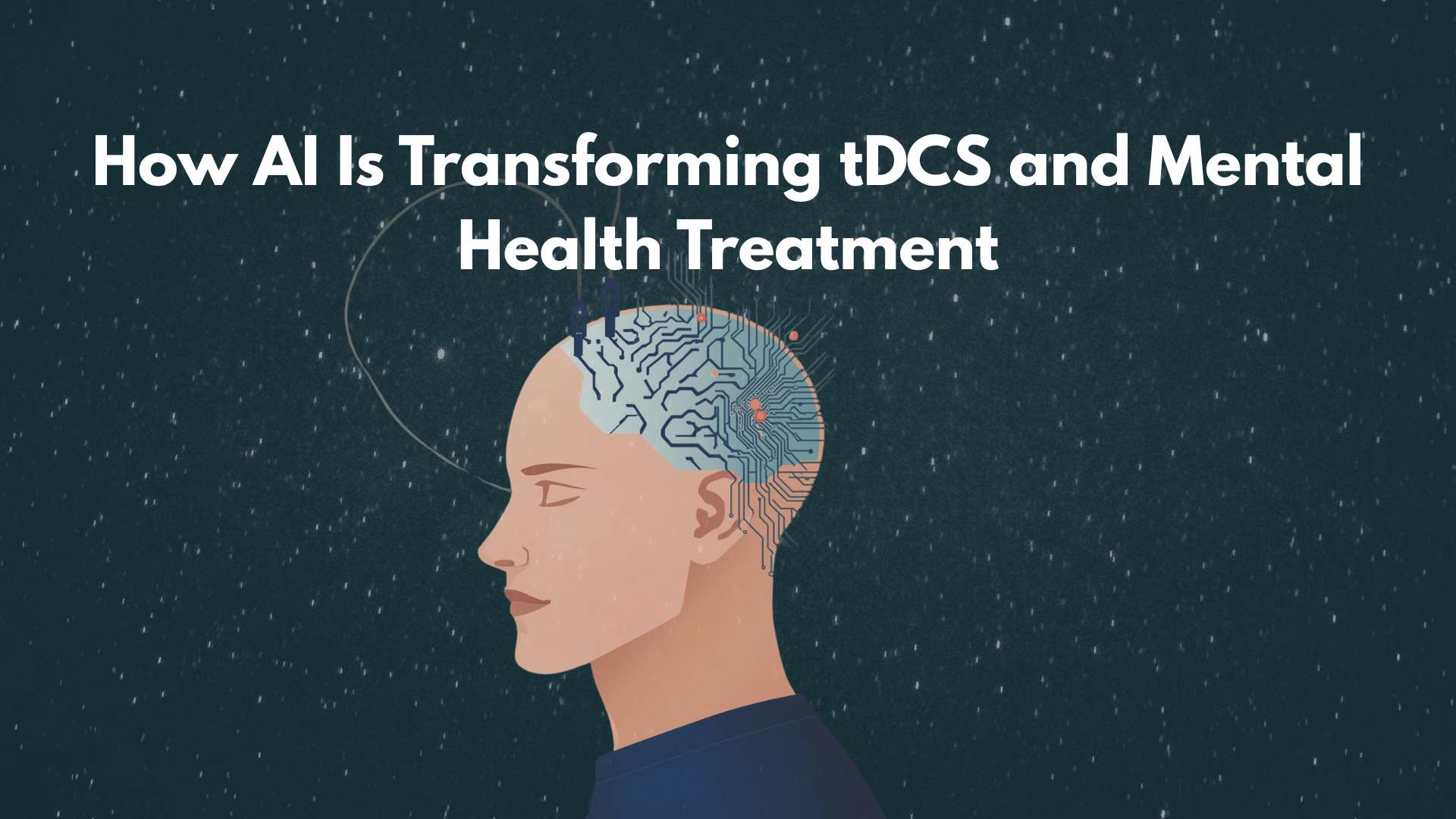
From Conventional Methods to Custom-made Brain Stimulation
Transcranial direct current stimulation (tDCS) isn’t a new thing. The idea is straightforward: use a weak electrical current to target a few parts of the brain to influence neural activity.
However, in the past, tDCS has been mostly carrying out the following fairly standard procedures:
- Fixed electrode positions
- Pre-set stimulation power
- Little personalization in treatment
To put it simply, this is where AI turns everything around.
The solution that Neurophet displayed is a mesh of:
- brain image analysis using MRI scans
- simulation applications
- stimulation equipment
The AI engine within the platform can study the user’s brain shape and suggest:
- the place to be stimulated
- the strength of the current
- the evolution of the treatment over time
In brief, tDCS is transitioning from being a one-size-fits-all treatment to becoming a fine-tuned neurostimulation.
Why South Korea Is Becoming a Neurotech Powerhouse
This is a type of invention that can’t be simply attributed to one person’s effort alone. South Korea is making an attempt to establish itself as one of the leading countries when it comes to neurotechnology and AI-run healthcare.
There are a few elements that help propel the country in this direction:
- Close cooperation between medical facilities, startups, and universities
- Government initiatives supporting digital health and AI innovation
- Quick integration of new technologies into clinical practice
- Excellent infrastructure for imaging and data
Neurophet and other companies operating in the field are able to take their innovative ideas from lab to the clinic stages quickly, thanks to the ecosystem.
In contrast to the highly regulated or fragmented markets, South Korea serves as the quick-moving testing ground for medical AI products.
From Antidepressants to Brain Stimulation
The importance of tDCS among health alternatives expands with the declining acceptance of the antidepressant drug models.
Of course, using medications is sometimes the most suitable way of treatment, but they have upsides, such as:
- Beginning effects impact delay each patient differently
- Side effects can range from tiredness to loss of emotional response
- Meds work variously
Besides that, the mental health situation worsens worldwide and especially depression keeps its growth pattern.
Because of this, the market for non-invasive techniques such as tDCS was created. Plus, these techniques have:
- Very light physical side effects
- Able to be combined with other treatment modes
- Are user-friendly and can be easily repeated
Use of tDCS is not entirely risk-free, yet it is one component of the overall move to “electroceuticals”—the use of electricity-based therapies over the drugs-based ones.
AI as a Force Multiplier
AI is the distinguishing factor that gives tDCS the potential to be a truly game-changing therapy.
The Benefits
Using AI-led neurostimulation offers the following advantages:
- Treatment individualization on a large scale. Interventions can be adjusted to express brain features of individuals instead of defaulting to population averages.
- Increased accuracy. Computational tools model how electrical currents flow through brain tissues, thus raising precision.
- Minimization of trial-and-error. Doctors base their treatment modifications on recommendations driven by data, not simply on experience or gut feeling.
- Possibility of at-distance healthcare. In combination with telemedicine, treatments guided by AI could be introduced at patients’ homes.
Simply put, AI gives a chance for a degree of refinement that was not previously thought capable in the context of non-invasive brain stimulation.
Risks and Limitations (That Shouldn’t Be Overlooked)
Despite the apparent brilliance of it all, the marriage of AI and brain stimulation invokes quite a few serious issues.
Clinical Doubts
Research around tDCS is yet to be completed. Although results have been positive for depression and stroke recovery, we still lack good quality proofs in some areas of application.
Over-reliance on Algorithms
If the medical professionals rely significantly on the AI’s advice, it may reduce their clinical judgment or even bring in some biases as the models may be based on limited datasets.
Ethical Dilemmas
When the human brain is the subject of direct technological influence, issues of consent, autonomy, and long-term consequence notably become more complicated.
Consumer Dangerous Experiments
Devices for conducting tDCS have already been put on the market without prescribing and the emergence of “DIY neurohacking” is really the last thing we want—especially if it is augmented with irrationally used AI systems.
So, what AI does is not to wipe the uncertainty clean, but perfectly to work within the limits of our current understanding.
A Large Potential Market Makes Commercial Waves
Industry players simply cannot close their eyes to the fact that the coming together of AI and neurostimulation is a real opportunity for them.
Among the reasons:
- There is an increasing need for mental health-related offerings
- People are becoming more and wary of relying on medication solely
- Big and rapid steps forward are being made in medical AI
- The digital health grids are growing
This opens gigantic opportunities for:
- New neurotech startups
- Pharmaceuticals, device companies partnerships
- Software and hardware combo treatment models that are scalable
tDCS, especially when it is backed with the help of AI, might easily follow a similar path to that of wearables—beginning in the clinical settings and later making a move to the area of health and wellness in a much broader sense.
What Lies Ahead
Neurophet’s demonstration signals the direction the sector is taking rather than just presenting a one-time novelty.
Eventually, our world will be such that:
- Brain stimulation will become personal and data-oriented
- AI will be indispensable when it comes to scheduling treatments
- Non-invasive therapies will become a staple of the health industry
- Mental healthcare will diversify beyond drugs
The fundamental question isn’t about tDCS becoming a thing or not—it’s rather about how fast AI can make it a trusted, extensive, and widely accepted method.
Conclusion
AI-powered tDCS goes beyond neuroscience, healthcare, and technology.
It unites:
- The potential of personalized medicine
- The urgency of the mental health crisis
- The power of artificial intelligence for scaling
More and more features are showing South Korea as a leader in this field, portraying what can be achieved when innovation, infrastructure, and clinical practice are combined.
Progress, however, must be measured against the risks, just like with any other up-and-coming technology—especially one which interacts directly with the brain.
Optimizing the brain isn’t solely a technical issue.
It’s a human one.